Vietnamese Steamed Rice Rolls Voted Among 10 Must – Try Dishes In The World
Thanks to the variety of ingredients and elaborate processing methods, many Vietnamese dishes such as pho, bun cha, banh mi, etc. have become familiar names on the international culinary map.
Australian magazine Traveller has named Banh Cuon (steamed rice paper rolls) one of the world’s 10 best dishes to try along with Japan’s sushi and Malaysia’s Sarawak Laksa noodle soup.
“There’s a certain magic to the way these big sheets of steamed rice noodles are made before they’re wrapped around savory fillings and served with herbs and sauce,” the magazine said about Vietnam’s Banh Cuon.
Banh cuon is a traditional Vietnamese dish that is always overshadowed by the omnipresent banh mi or pho.
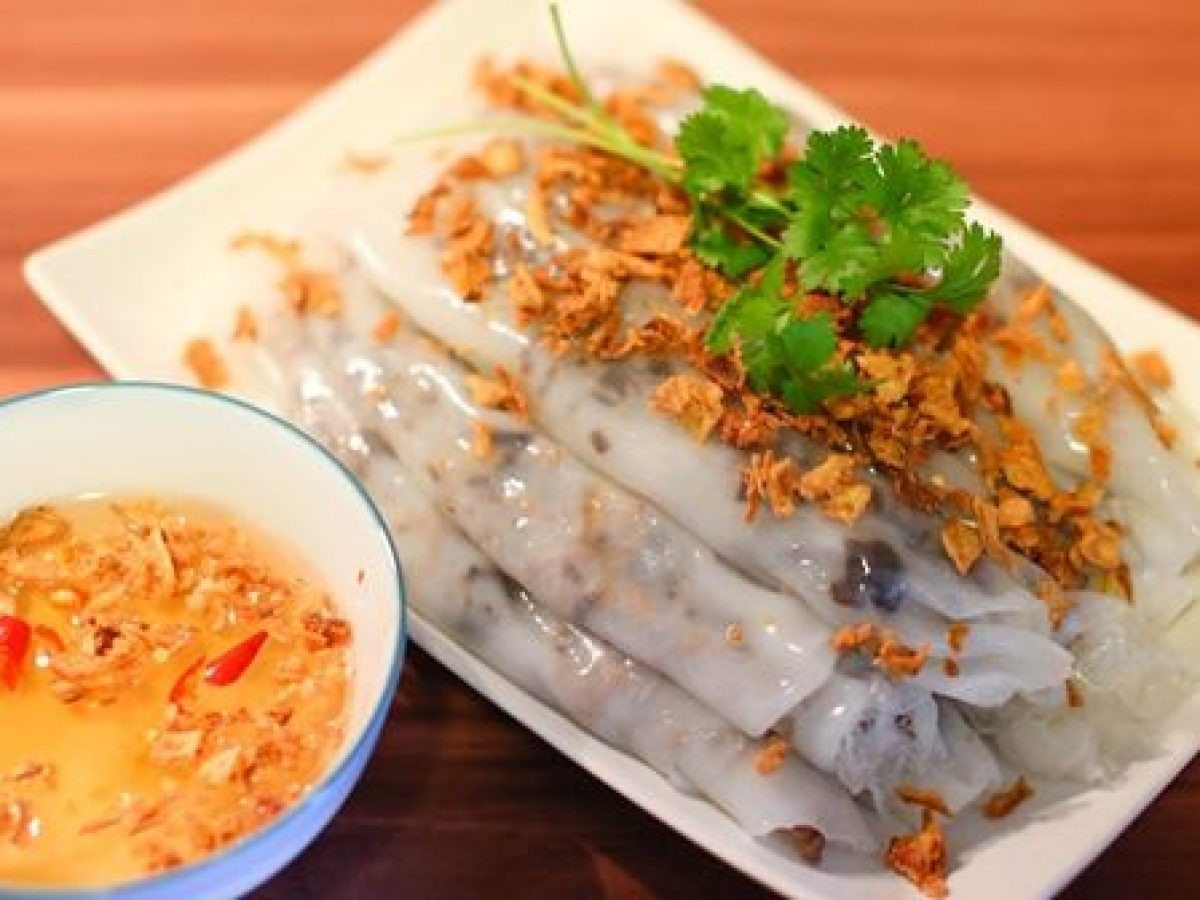 |
| Photo: Bep Cua Toi |
The main ingredients of Vietnamese steamed rice roll
Each Vietnamese has their favorite, go-to options for the first meal of the day. While some love a hot bowl of Pho, others are fans of “Xoi Xeo” (Vietnamese sticky rice), and many fancy sitting at a Banh Cuon stall to kick off their days.
Vietnamese steamed rice roll, as its name suggests, is made mainly from rice. Vietnam must be a huge fan of rice when its many specialties are made from this simple ingredient. The rice used for Banh Cuon must be of the best quality. It is important to pick rice that is not too soft or too hard for powder so that it will not be crushed and milled into powder liquid.
How to make Vietnamese steamed rice rolls?
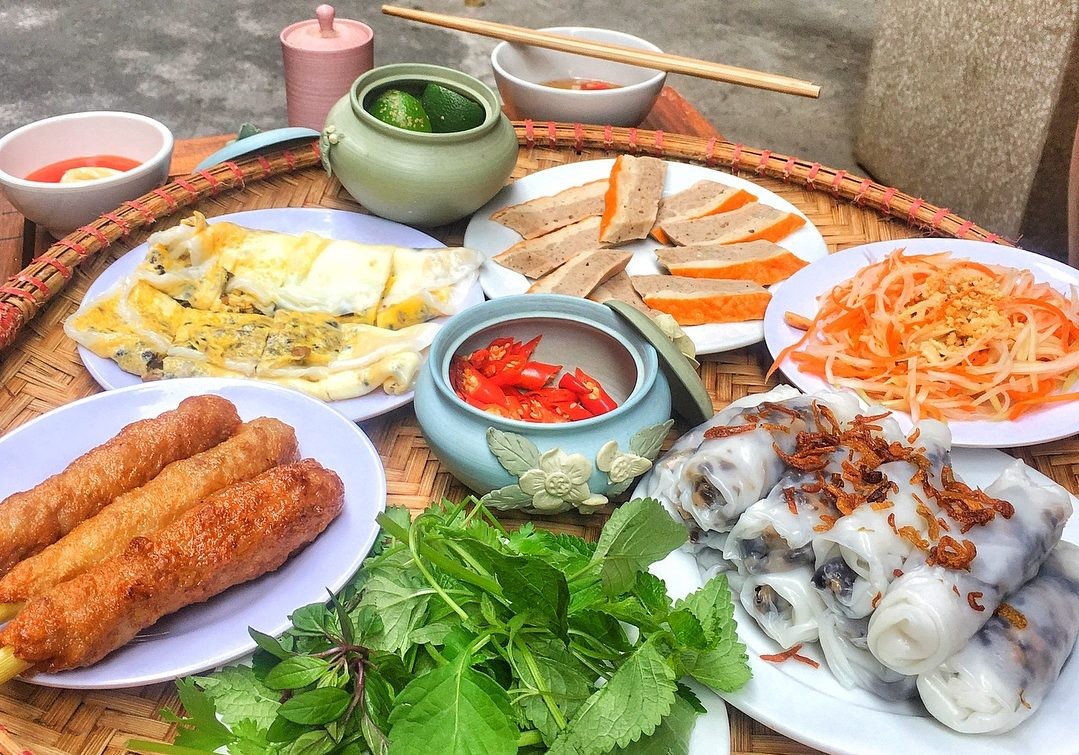 |
| Photo: Emoi.vn |
As mentioned above, there are different variations of Vietnamese steamed rice rolls throughout the country, and the detailed recipe of each variation is different. Below is the basic common process of making Vietnamese steamed rice rolls that most regions apply.
High-quality rice will be soaked in water for 2-3 hours before being put in a traditional gristmill. The Vietnamese believe that steamed rolls made from traditionally milled powder are much more delicious than the ones made by a modern machine. The Vietnamese steamed rice roll mix needs to be ground 2-3 times to make smooth and soft powder.
The mixture of rice flour and water is stored at room temperature for 2-3 hours before the rolling process. At local food stalls, there is always a water pot boiling at 100ºC to make sure it is ready to cook the rolls at any time. A thin layer of rice batter is poured onto a piece of cloth and evenly spread to create a thin coat. The cook needs to be quick because the whole process above lasts just about 3 seconds. Then, they steam the roll and carefully take it out of the cloth. The result should be a thin and almost transparent rice roll.
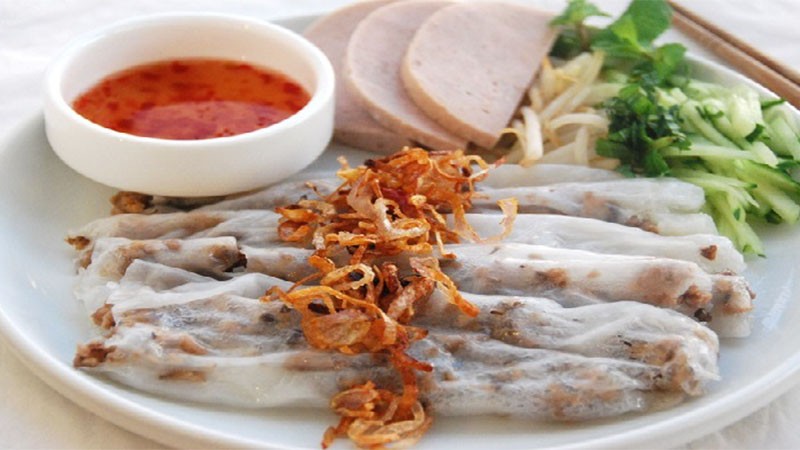 |
| Photo: Bach hoa XANH |
Often, the cook will add fillings to the roll after it is steamed. In Northern Vietnamese provinces, the fillings of Vietnamese steamed rice rolls often consist of pork and mushrooms.
Thanh Tri, Hanoi, has gained a huge reputation as the cradle of steamed rice roll Vietnamese. The most distinctive feature of this variation is the thin, chewy coat of the roll. The rolls are also covered with dried shallots. Thanh Tri steamed rice roll is often served with “cha que” (roasted cinnamon pork) and sweet and sour fish sauce with “ca cuong” – a special spice that brings an irresistible aroma to the dish.
Different from other kinds of Banh Cuon, Cao Bang steamed rice roll comes with a bottle of sweet bone broth instead of dipping fish sauce. The fillings usually do not contain wood-ear mushrooms and the cook will not add dried shallots onto the rolls, also. Instead, they will add chopped onions to the broth to make it more aromatic. A dish of Cao Bang steamed rice roll will have egg fillings. It tastes incredibly appetizing when dipped into the bone broth.
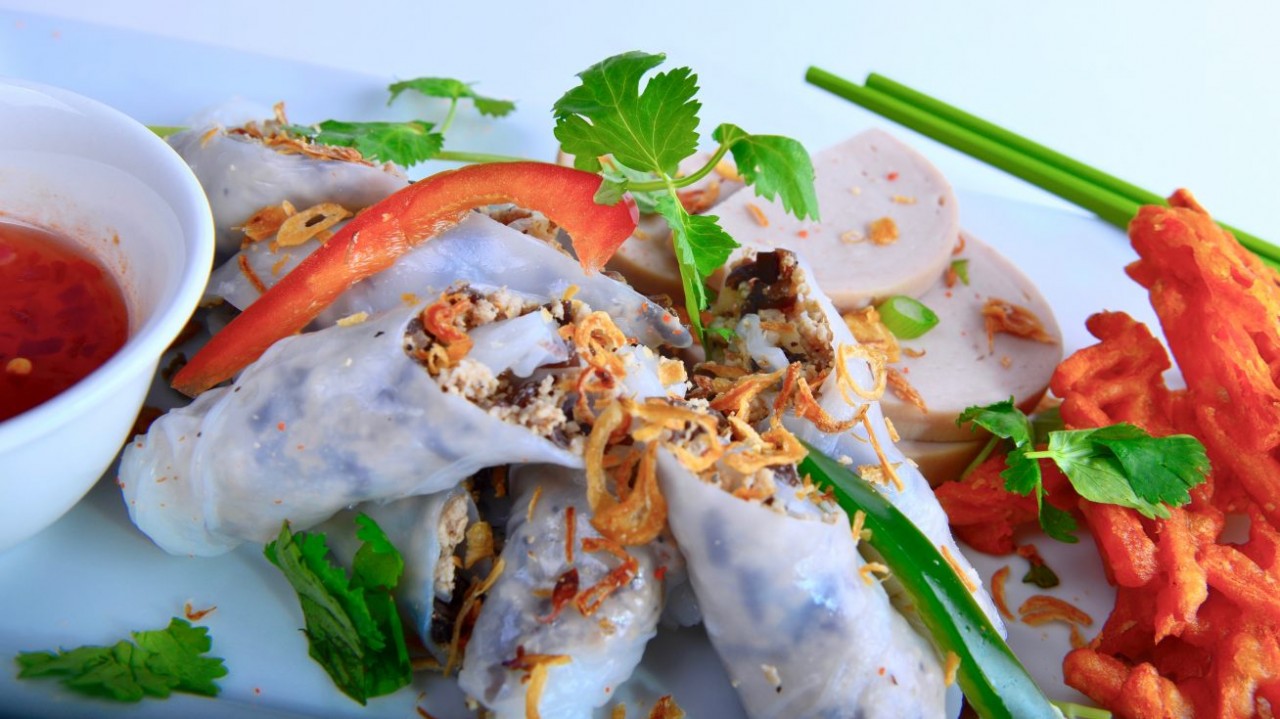 |
| Photo: Tay Ho Food Company |
The post Vietnamese Steamed Rice Rolls Voted Among 10 Must – Try Dishes In The World appeared first on Vietexplorer.com.
View more from VietExplorer:
Vietnam approves e-visa application from 80 countries from July“Travel bubble” the critical factor helps recover tourism industry
Vietnamese backpacker traveling the world on motorbikes returns Vietnam
Entrance fees to caves in Quang Binh reduced
Seeking unforgettable joy in Vietnam’s ravishing Fun Island
Vinpearl Safari Phu Quoc, a ticket to the wilderness
5 must-visit places in Southwest Vietnam
Peaceful daily life in Vung Tau in photo-shoots of a deaf American Photographer
Cu Lao Xanh – a Blue Lagoon of Vietnam
Vietnam National Parks gets rave reviews on New York Times
Tourist destination flocked with thousands of monkeys
Top Vietnam Destinations: Glamorous Pleiku in the eyes of avid travel loner
Exhibition calls attention to preserving Vietnam’s traditional villages
Ho Chi Minh City photo exhibition introduces Vietnam’s 12 island districts
Exploring Cha Loi Cave in Quang Binh Province
Vietnam Rice Fields look amazing and monitory from the space
Vietjet Air offers domestic flight’s low-cost tickets starting from less than half one US dollar
Seafood specialties in Ca Mau – Mantis shrimp
Big 7 Travel picks seven best coffee shops for your trip to Sapa
Mesmerizing photos of Kong Collapse, central Vietnam


Nhận xét
Đăng nhận xét